The hidden work of sleep: How the brain builds itself in early life
04-22-2026
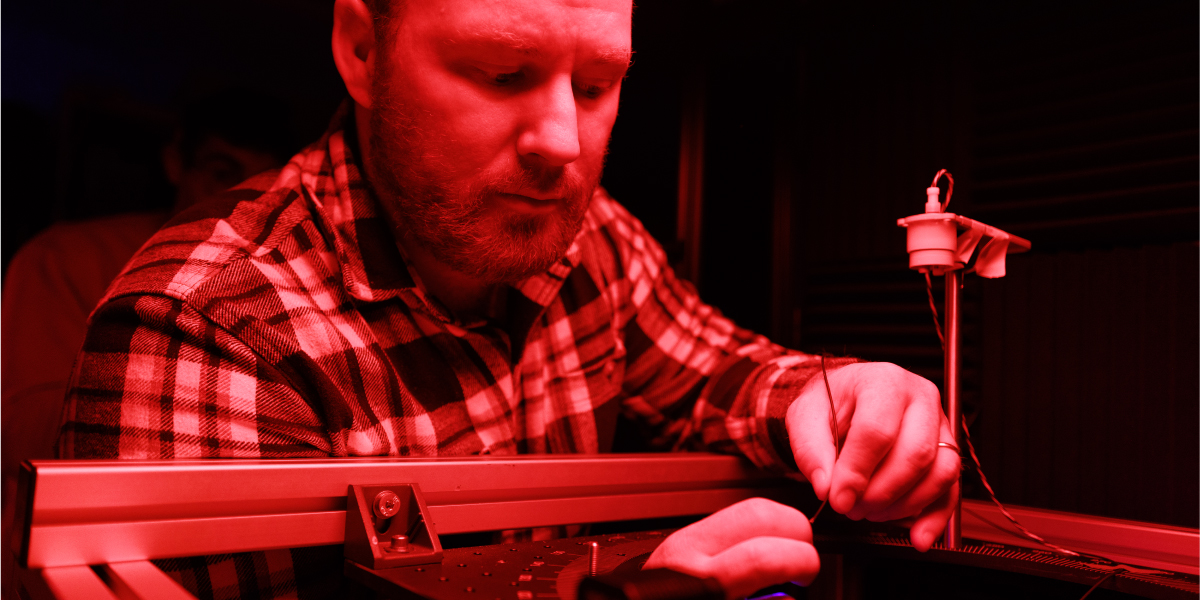
From the earliest days of life, sleep isn’t quiet. It’s filled with small, sudden movements—brief twitches— that may look random but are anything but. New research from Purdue University shows these movements reveal a carefully timed developmental process that helps the brain organize itself, offering new insight into how sleep supports early brain development.
A study led by Purdue biological sciences professor James Dooley, with research technician John Kobrossi, maps how rapid eye movement (REM) sleep evolves across early development. The key discovery; REM sleep doesn’t begin as the structured state seen in adults. Instead, it gradually separates into two distinct phases, each playing a different role in shaping the brain.
Two stages of REM sleep emerge over time
In adults, REM sleep alternates between two substates: phasic REM, marked by bursts of twitches, and tonic REM, a quieter phase without movement. While these stages are well known in adult brains, their origins have remained unclear.
Dooley’s team found that early in development, REM sleep is dominated by twitching, what researchers would classify as phasic REM in adults. Over time, a quieter period begins to appear at the start of each REM cycle. This marks the emergence of tonic REM.
By tracking brain activity and movement across development, the researchers showed that these two phases don’t appear all at once. Instead, their defining features—patterns of brain waves, timing of movement, and neural activity—develop step by step.
“This work helps establish a timeline for how REM sleep becomes more structured,” Dooley said. “It shows that what we see in adults is built gradually during early life.”
Why those early twitches matter
The study reinforces a growing understanding that early sleep plays an active role in building the brain.
The frequent twitches seen in early REM sleep generate bursts of sensory feedback. These signals help the brain map the body, linking movement with sensation and laying the groundwork for coordination and control.
As development continues, the newly emerging tonic REM phase introduces something different: a period of stillness. This quieter state may allow the brain to organize and refine those early sensorimotor connections without ongoing movement or even focus on the connections from other sensory systems, like hearing or vision.
In this way, the sleeping infant brain may first learn the language of its own body and then find the quiet to make sense of it.
Potential impact beyond basic science
Understanding how REM sleep develops could have applications well beyond the lab.
One potential use is in artificial intelligence and robotics. The research suggests a “body-first” learning model, where systems first explore and calibrate their own movements before responding to external input. This staged approach could help create machines that adapt more effectively to complex environments.
The findings may also inform early detection of neurodevelopmental conditions. Because the study establishes a clear timeline for how REM sleep should develop, disruptions to this sequence could serve as early warning signs.
Conditions such as autism spectrum disorder are often linked to differences in early brain development but can be difficult to detect in infancy. Monitoring sleep patterns in newborns could offer a non-invasive way to identify atypical development sooner, when intervention may have the greatest impact.
A window into the developing brain
By combining detailed brain recordings with high-speed behavioral tracking, the team was able to capture a dynamic picture of sleep as it changes over time.
Ultimately, the study highlights sleep as more than rest- it is an active, evolving process that helps build the brain from the ground up.
As Dooley’s work shows, even the smallest movements during sleep can reveal a much larger story about how the brain develops, and how those early patterns may shape learning, behavior and health later in life.
About the Department of Biological Sciences at Purdue University
The Department of Biological Sciences is the largest life sciences department at Purdue University. As part of Purdue One Health, we are dedicated to pioneering scientific discoveries and transformative education at the cutting edge of innovation. From molecules to cells, from tissues to organisms, from populations to ecosystems- we bring together multiple perspectives, integrating across biological scales to advance our understanding of life and tackle the world’s most pressing challenges. Learn more at bio.purdue.edu.
Written by: Alisha Willett, Communications Specialist, amwillet@purdue.edu
Contributors: Jimmy Dooley, jcdooley@purdue.edu