Purdue roots shape Alan Wu’s career in clinical laboratory science
10-01-2026
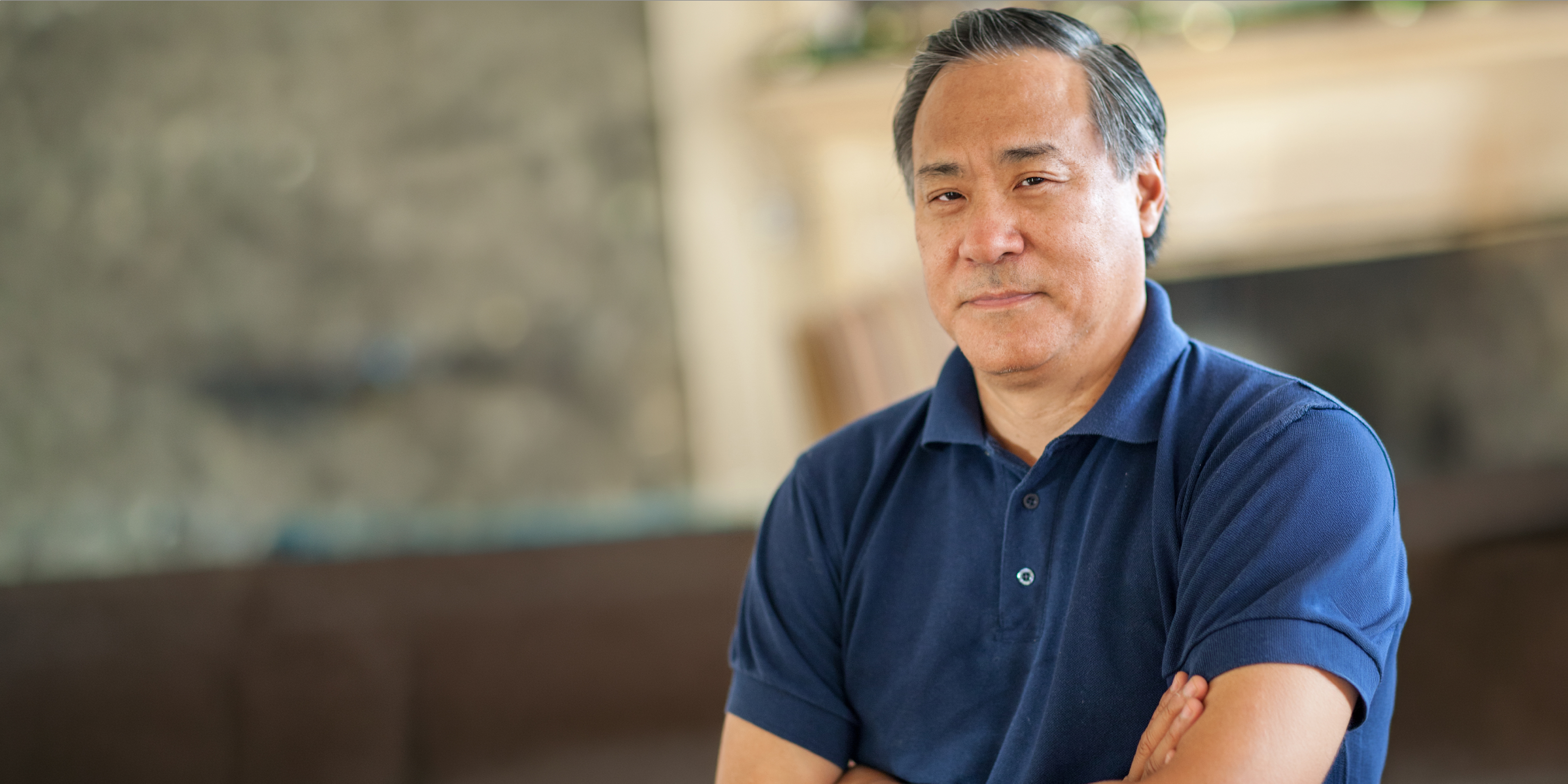
For Alan Wu, a career spanning more than four decades began at Purdue with research, mentorship and a willingness to ask what might come next.
Wu spent his undergraduate years at Purdue from 1971-75, earning a degree in both biology and chemistry and became involved in research, working as a senior research associate under Professor Harry Pardue. He also taught Chemistry 101 which led him to his field after graduation.
At first, medical school seemed like a possibility. But his growing interest in research led by Pardue, encouraged him to pursue graduate school and a PhD — advice that would help set the course for Wu’s career.
“I think the most important thing that happened to me at Purdue was I had a mentor,” Wu said. “Harry Pardue really set me on this journey.”
That journey eventually took Wu from Purdue to the University of Illinois (Champaign-Urbana), where he earned his PhD under analytical chemist Howard Malmstadt, followed by a postdoctoral fellowship, a faculty position at the University of Texas and leadership roles in clinical laboratories. Today, Wu is a professor at the University of California, San Francisco and Director of the Chemistry Laboratory at the Zuckerberg San Francisco General Hospital.
Along the way, he has trained hundreds of pathology residents and dozens of postdoctoral fellows who went on to careers in clinical laboratory science.
Finding a path through mentorship
Wu’s career reflects the many directions a science education can lead.
As an undergraduate, he was interested in both science and medicine but did not yet know exactly where those interests would take him. His experience conducting research at Purdue helped him recognize that graduate study could provide a path to combine those interests.
He encourages current students facing similar decisions to seek out mentors who can help them understand the possibilities.
“Find somebody who has similar interests to you and talk to them about what they did, what they think you should do,” Wu said.
That advice comes partly from his own experience. His parents were not involved in medicine or academia, so Wu had to seek guidance elsewhere when making decisions about his future.
He also learned early that students need to take the initiative to create opportunities for themselves.
Purdue was a large university when Wu was an undergraduate, and his introductory chemistry course included hundreds of students. It would have been easy to get lost in the crowd. Instead, Wu approached professors in analytical chemistry, explained his interests and asked about opportunities to work in their laboratories.
“I went to the professors and I said, ‘This is what I want to do. Can I work in your lab?’” he recalled.
That initiative led to undergraduate research experience that became an important part of his preparation for graduate school and his eventual career.
From the research laboratory to patient care
Wu’s postdoctoral training marked another important transition.
His education had taught him how to make measurements, conduct experiments and approach scientific questions. His postdoctoral work showed him how those skills could be applied to human disease and diagnosis.
That realization led him into clinical laboratory science, where laboratory testing plays a critical role in helping physicians make decisions about patient care.
Over the course of his career, Wu has worked in both academic and hospital settings. After 10 years as an assistant professor at the University of Texas Medical School, he became director of the chemistry laboratory at Hartford Hospital, where he spent about 12 years before moving to California.
Today, his work combines research, teaching, laboratory leadership and mentorship. Rather than focusing only on preparing future professors, he has helped train scientists who lead clinical laboratories and contribute to patient care in hospitals.
For Wu, that connection between science and its practical impact remains central to the field.
Telling the stories behind laboratory science
In more recent years, Wu has found another way to share what he has learned.
After publishing scientific papers for much of his career, he began writing paperback books featuring short stories based on real medical cases. The stories illustrate how laboratory scientists work with physicians to help solve medical problems and make decisions about patient care.
Some stories have positive outcomes. Others involve mistakes or had difficult outcomes.
Wu intentionally includes both.
He wants the public to better understand the role of the clinical laboratory and the importance of accurate laboratory information in health care.
“I wanted to promote clinical laboratory science to the lay public,” Wu said.
That goal has also led him to use social media to reach audiences who might never encounter a scientific paper or professional conference. His TikTok channel, Lab Tales, features stories from his books as well as discussions of contemporary topics.
For Wu, communicating science effectively requires more than simply having accurate information. It requires finding ways to make that information compelling and accessible.
Looking back at Purdue
More than 50 years after he first arrived at Purdue, Wu still sees his undergraduate experience as a defining part of his career.
One of his Purdue mentors, Graham Cooks, is still at the University, and Wu recently had the opportunity to reconnect with some of his graduate students and spoke about his career journey.
He would like to return to Purdue again to share what he has learned with students.
For Wu, the opportunity would be about more than recounting a long career. It would be a chance to pass along the same kind of guidance that he received as a student.
His message to students is straightforward: Seek out mentors. Get involved. Ask questions. And take the initiative to pursue opportunities.
Those lessons helped shape Wu’s career from his first research experiences at Purdue to his work training the next generation of clinical laboratory scientists.
And they are lessons he continues to share with the students who come after him.
About the Department of Biological Sciences at Purdue University
The Department of Biological Sciences is the largest life sciences department at Purdue University. As part of Purdue One Health, we are dedicated to pioneering scientific discoveries and transformative education at the cutting edge of innovation. From molecules to cells, from tissues to organisms, from populations to ecosystems- we bring together multiple perspectives, integrating across biological scales to advance our understanding of life and tackle the world’s most pressing challenges. Learn more at bio.purdue.edu.
About Purdue Chemistry
The James Tarpo Jr. and Margaret Tarpo Department of Chemistry is internationally acclaimed for its excellence in chemical education and innovation, boasting two Nobel laureates in organic chemistry, the No. 1-ranked analytical chemistry program and a highly successful drug discovery initiative that has generated hundreds of millions of dollars in royalties. Learn more about chem.purdue.edu.
Written by: Alisha Willett, Senior Communications Specialist, amwillet@purdue.edu
Contributors: Alan Wu