Targeting immune response could make stem cell transplants safer
09-15-2026
A treatment that helps the immune system fight cancer can sometimes turn that same defense against healthy tissue. New research from Purdue University has identified a potential way to separate those two effects, offering a possible path toward safer blood stem cell transplantation.
Stem cell transplantation (i.e. bone marrow transplantation) is a potentially curative treatment for some blood cancers. The procedure replaces a patient’s blood-forming cells with healthy cells from a donor. Donor immune cells can then recognize and attack cancer cells, helping the body fight the disease.
But that immune response can come with a serious complication called graft-versus-host disease, or GVHD. In this condition, donor immune cells mistakenly recognize healthy tissues as threats and attack them. The intestines are particularly vulnerable, and severe intestinal damage can lead to serious complications for patients.
Now, Purdue researchers have identified a previously unknown regulator that helps control the behavior of immune cells in the intestine following transplantation. Their findings, published in The Journal of Immunology, point to the regulator GATA3 as a potential target for reducing intestinal damage while preserving the donor immune response that helps fight cancer.
“It's like friendly fire,” said Matthew Olson, professor of biological sciences at Purdue. “We want to protect the healthy tissue without weakening the immune response that is attacking the cancer.”
Finding a new target
The researchers focused on a type of immune cell called a T cell, which plays an important role in coordinating the body's immune response. While these cells can help eliminate cancer, they can also contribute to inflammation and tissue damage after transplantation.
Olson and his team found that GATA3 helps control the activity of donor T cells in the intestine. When the regulator is active, it contributes to the production of molecules that promote inflammation and can damage intestinal tissue.
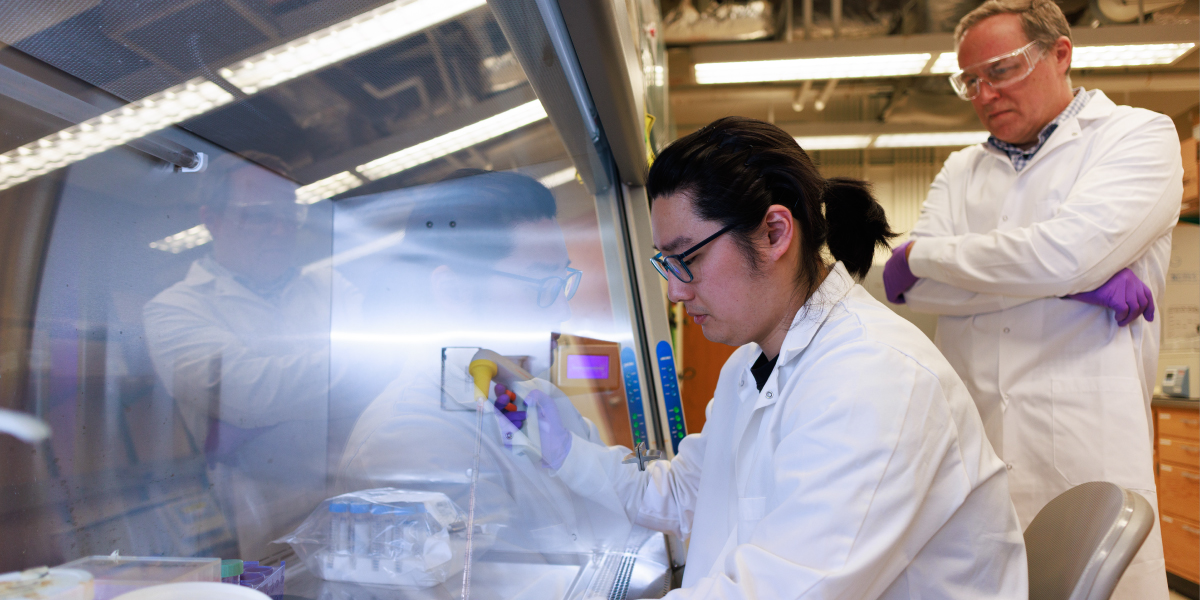
Franklin Yeo, a graduate student in Olson’s lab in Purdue’s Department of Biological Sciences, performed much of the laboratory work for the study. The research team combined laboratory experiments with computational analysis to better understand how immune cells behave after transplantation.
The researchers also examined gene activity in intestinal tissue from people who had undergone transplantation. Their analysis found evidence of inflammatory immune activity similar to what they observed in their laboratory studies, strengthening the connection between the newly identified regulator and intestinal complications following transplantation.
Separating the good from the bad
The challenge in treating these complications is that the immune response isn't entirely harmful.
The donor cells responsible for attacking healthy tissue can also attack cancer cells — an effect that is an important part of the treatment's success. Simply shutting down the immune response could therefore protect healthy tissue while also taking away some of the transplant's ability to fight cancer.
The Purdue team's findings suggest a more targeted approach may be possible.
By interfering with the molecular signals that drive harmful inflammation in the intestine, future treatments could potentially reduce tissue damage without eliminating the donor cells' cancer-fighting activity.
“Our work identifies a potential target that could allow us to fine-tune the immune response rather than broadly suppress it,” Olson said.
The discovery could eventually contribute to new treatments for patients at risk of intestinal complications following transplantation. It also could help researchers develop diagnostic tools to identify patients who may be more likely to develop severe intestinal disease.
The research was conducted in collaboration with the Purdue Institute of Cancer Research, bringing together expertise in cancer biology, immunology and computational research.
For Olson and his team, the next step is to determine whether this newly identified pathway can be safely targeted to protect healthy tissue while preserving the immune system's ability to fight cancer.
The work represents another step toward more precise cancer treatments — therapies designed not simply to turn the immune system on or off, but to direct its power where it is needed most.
About the Department of Biological Sciences at Purdue University
The Department of Biological Sciences is the largest life sciences department at Purdue University. As part of Purdue One Health, we are dedicated to pioneering scientific discoveries and transformative education at the cutting edge of innovation. From molecules to cells, from tissues to organisms, from populations to ecosystems- we bring together multiple perspectives, integrating across biological scales to advance our understanding of life and tackle the world’s most pressing challenges. Learn more at bio.purdue.edu.
Written by: Alisha Willett, Senior Communications Specialist, amwillet@purdue.edu
Contributors: Matt Olson, Franklin Yeo