Purdue Researchers Identify New Pathway for Treating Aggressive Vascular Cancer
02-27-2026
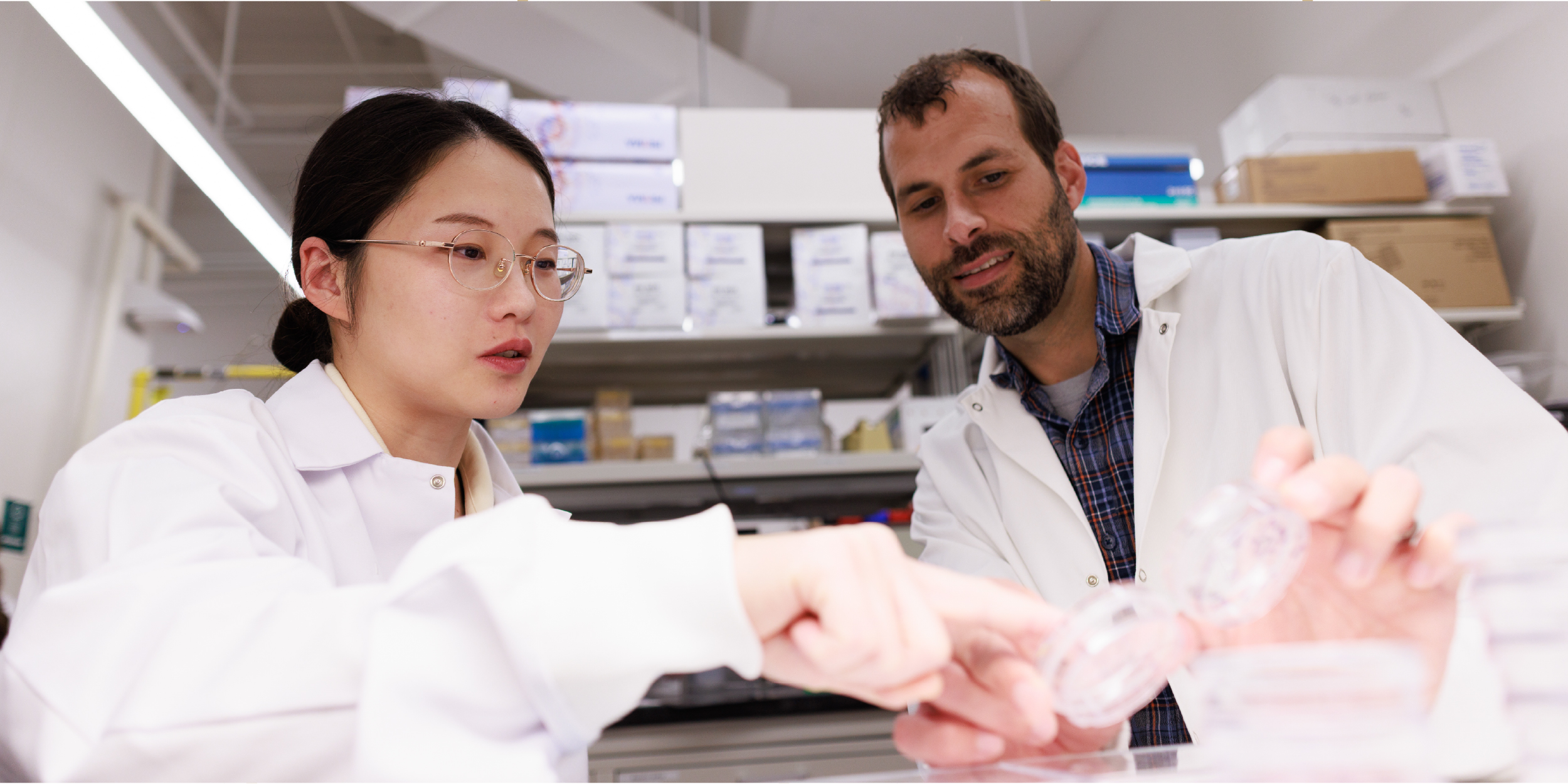
A discovery led by Purdue University biologist Jason Hanna could open the door to a new way of treating one of the most aggressive and difficult-to-treat cancers. The research, published in RNA, Canonical microRNA loss drives tumor development implicating therapeutic efficacy of enoxacin in angiosarcoma identifies how the loss of small molecules that help control gene activity- called microRNAs- can trigger tumor growth, and how an existing drug may help restore their function.
The study, led by authors Bozhi Liu, Ant Murphy, and Annaleigh Benton focuses on angiosarcoma, a rare and fast-spreading cancer that begins in the cells lining blood vessels. Because it develops quickly and resists standard treatments, patients often face limited options and poor outcomes.
“Our research points to a new way of thinking about how this cancer develops,” said Hanna, a professor in Purdue’s Department of Biological Sciences. “We looked at what happens when a natural control system in the cell stops working- and how we might turn it back on.”
In healthy cells, microRNAs act like switches that keep genes in balance. When this system breaks down, cancer-promoting genes can become overactive, allowing cells to grow and spread unchecked. Hanna’s team found that restoring this balance could slow tumor growth.
To test that idea, the researchers studied a compound called enoxacin, a long-approved antibiotic known to boost microRNA production. When applied to angiosarcoma cells, enoxacin helped restore microRNA activity. The treated cells grew more slowly, spread less, and showed reduced activity in gene pathways linked to cancer development.
“The results suggest that helping cells recover their natural regulatory systems might be a powerful way to fight this disease,” Hanna said. “It’s an approach that works with the biology of the cell rather than against it.”
Because enoxacin has already been approved for other uses, the researchers say it could potentially move to clinical testing faster than a brand-new drug. While more studies are needed to confirm safety and effectiveness, the findings point toward a promising new strategy for treating vascular cancers that currently have few options.
Lui noted that the work grew out of a shared goal to connect fundamental biology to real-world impact. “Understanding how these small molecules protect healthy cells gives us clues for how to restore that protection when it’s lost,” he said.
The research also connects to Purdue’s One Health initiative, which emphasizes the interconnected health of people, animals, and the environment. By studying the mechanisms that control cell growth and disease, Hanna and his team contribute to broader efforts to understand how diseases develop and how interventions can improve health outcomes across species.
The study highlights Purdue’s strength in combining molecular biology with translational discovery- bridging basic science and potential therapies- and demonstrates the collaborative research environment supported by the Purdue Institute for Cancer Research.
About the Department of Biological Sciences at Purdue University
The Department of Biological Sciences is the largest life sciences department at Purdue University. As part of Purdue One Health, we are dedicated to pioneering scientific discoveries and transformative education at the cutting edge of innovation. From molecules to cells, from tissues to organisms, from populations to ecosystems- we bring together multiple perspectives, integrating across biological scales to advance our understanding of life and tackle the world’s most pressing challenges. Learn more at bio.purdue.edu.
Written by: Alisha Willett, Communications Specialist, amwillet@purdue.edu
Contributors: Jason Hanna, Assistant Professor, hannaja@purdue.edu
Bozhi Liu, Ph.D. candidate
Photo by: Brian Powell