Purdue partnership strengthens agricultural biosecurity efforts in El Salvador
03-31-2026
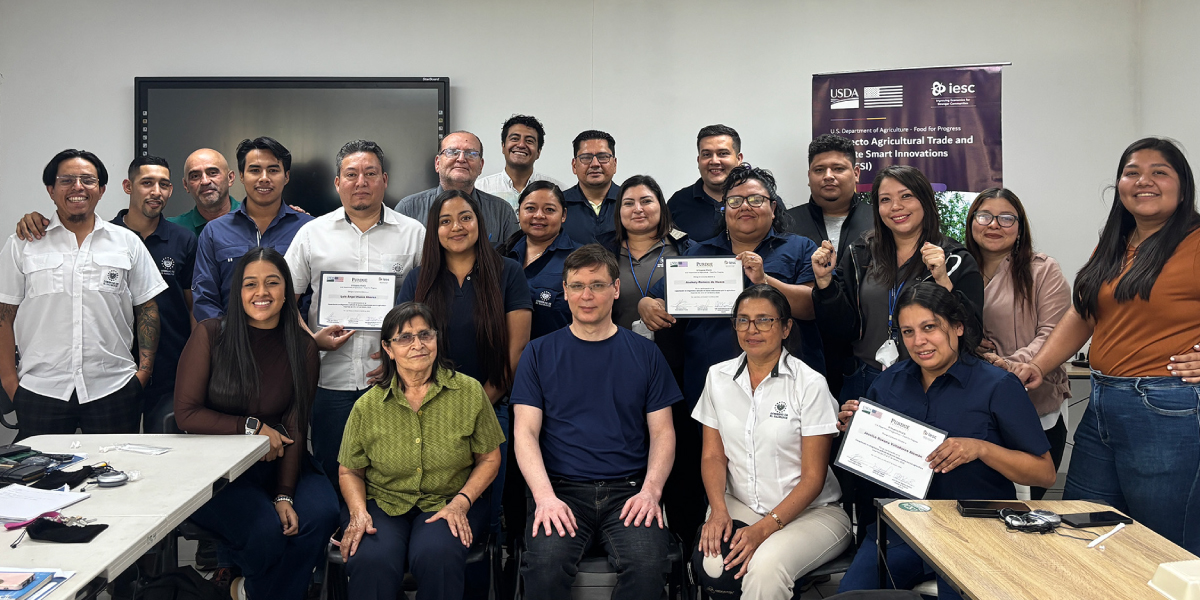
Protecting global food systems often starts with collaboration—and a recent international training led by a Purdue scientist highlights how partnerships across disciplines are making that possible.
Pavel Klimov, a postdoctoral research associate in Purdue University’s Department of Biological Sciences, traveled to El Salvador in February to lead a specialized training course on pest mite diagnostics. While the science focused on identifying microscopic threats to agriculture, the effort itself was rooted in a broader collaboration with the College of Agriculture.
The course was coordinated through Purdue’s International Programs in Agriculture (IPIA), part of the College of Agriculture, and supported by the U.S. Department of Agriculture. Gary Burniske, assistant director for program development in IPIA, played a key role in organizing the training as part of an ongoing international capacity-building initiative.
Held Feb. 23–27, the course brought together 31 participants from government agencies, agricultural organizations, universities, and the private sector. Many work in border inspection, quarantine and plant protection—areas where early detection of invasive pests is critical.
“This type of collaboration allows us to combine scientific expertise with on-the-ground training that has immediate impact,” Klimov said.
The training focused on mites, which are difficult to detect but capable of causing major agricultural damage. Some species can rapidly spread through crops or stored products, reducing yields and threatening food security. By improving diagnostic skills, participants are better equipped to identify these pests early and respond effectively.
Through lectures and hands-on laboratory work, Klimov introduced practical methods for identifying economically important pest mites. The goal was not only to build technical knowledge, but also to strengthen the systems that support agricultural biosecurity and international trade.
The course is part of a larger USDA-supported program led by Purdue that aims to build agricultural capacity across Central America. Through IPIA, Purdue serves as a primary technical partner, working with government agencies, universities and industry professionals to strengthen food systems and trade infrastructure.
Faculty, postdoctoral researchers and staff from across Purdue contribute to these efforts, providing training in areas ranging from plant health and diagnostics to food safety and supply chain management. Klimov’s participation reflects the collaborative approach that brings together expertise from multiple disciplines to address complex global challenges.
The experience also opened the door for continued collaboration. Participants expressed interest in future partnerships, including joint research projects and expanded training opportunities. These connections help build an international network focused on managing agricultural pests and protecting crop production.
Klimov’s work abroad also supports ongoing research at Purdue, including the development of an online resource for identifying plant-feeding mites. Input from international collaborators will help expand the tool and make it more relevant to regions where these pests are most prevalent.
By connecting expertise from Purdue’s College of Science and College of Agriculture, the initiative demonstrates how collaboration can extend the university’s impact far beyond campus.
“This partnership-driven approach is what makes programs like this successful,” Burniske said. “It allows us to share knowledge, build relationships and support agricultural systems around the world.”
About the Department of Biological Sciences at Purdue University
The Department of Biological Sciences is the largest life sciences department at Purdue University. As part of Purdue One Health, we are dedicated to pioneering scientific discoveries and transformative education at the cutting edge of innovation. From molecules to cells, from tissues to organisms, from populations to ecosystems- we bring together multiple perspectives, integrating across biological scales to advance our understanding of life and tackle the world’s most pressing challenges. Learn more at bio.purdue.edu.
Written by: Alisha Willett, Communications Specialist, amwillet@purdue.edu
Contributors: Pavel Klimov, pklimov@purdue.edu
Gary Burniske, grburniske@purdue.edu