Professor Anne Carpenter helps lead new approach to finding treatments for genetic diseases
10-06-2026
For millions of people living with rare genetic diseases, receiving a diagnosis can bring an unsettling reality: there may be no treatment available.
A new research project aims to change that by taking a different approach to drug discovery — looking at medicines that already exist and identifying new uses for them.
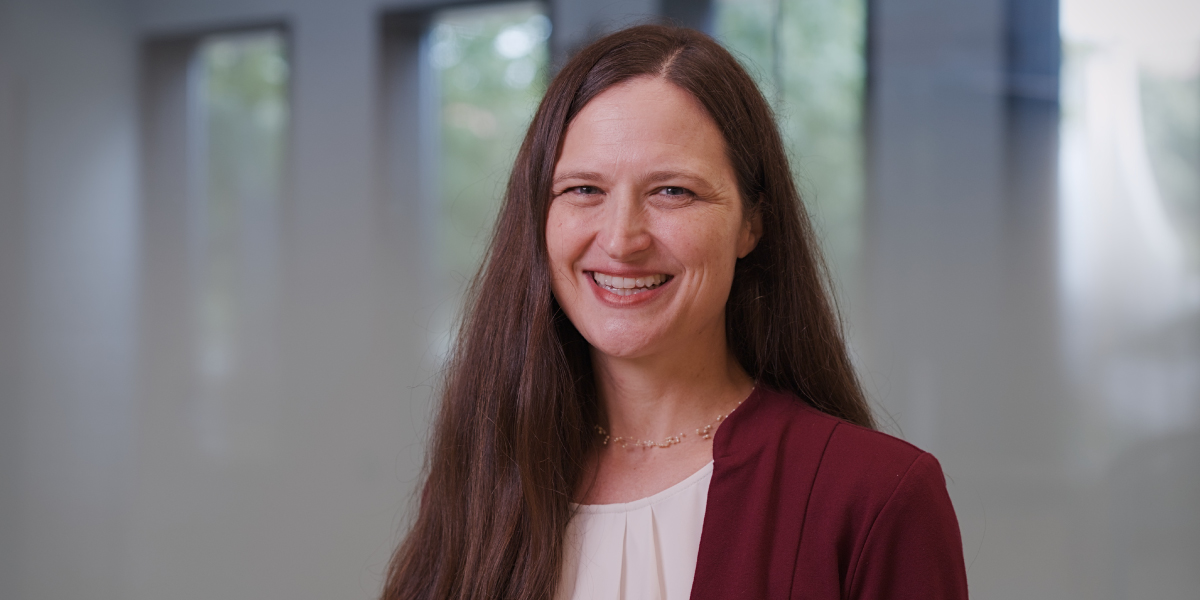
Anne Carpenter, the Irwin Tessman Professor, with appointments in the Department of Biological Sciences and the Department of Computer Science Purdue University, is helping lead Encore, a five-year project designed to systematically test existing medicines against genetic disease-associated changes. The project is being led in collaboration with JT Neal, an institute scientist at the Broad Institute of MIT and Harvard and also involves Runxi Shen, Research Assistant Professor in Biological Sciences at Purdue University.
Neal recently received a National Institutes of Health Transformative Research Award to support Encore. The award is part of the NIH’s High-Risk, High-Reward Research Program, which supports creative approaches to challenges in biomedical research.
For Carpenter, the project represents the culmination of years of work developing the technologies and expertise needed to make such a large-scale effort possible.
“This project is a lifelong dream fulfilled!” Carpenter said. “We’ve been building all the tools necessary to carry out this project, building the foundation over the past decade.”
Carpenter brings extensive expertise in computational biology, functional genomics and imaging to the project. Her work has helped advance the use of image-based approaches to understand biological processes and identify potential therapeutic opportunities. Her inventions also underpin technologies used by the biotechnology company Recursion and throughout the pharmaceutical industry.
Searching thousands of medicines at once
Drug development traditionally focuses on developing and testing new medicines for individual diseases. Drug repurposing takes a different route: It looks at medicines that have already been developed and asks whether they might be effective against a different disease.
Encore aims to scale that approach dramatically.
The project will build an experimental and computational platform capable of testing thousands of existing human medicines against hundreds of disease-associated genetic variants.
The researchers will use genetically engineered, lab-grown cells to model the effects of disease-associated variants. They will then use image-based screening to determine how different medicines affect those cells.
Carpenter’s expertise in computational analysis and imaging is central to this approach. She and Neal are combining complementary expertise in genomics, disease profiling, imaging and computational biology to create a screening system that can evaluate many potential drug-disease matches simultaneously.
Carpenter said the partnership with Neal is an important part of bringing the project together. Neal’s team will generate the data, while Carpenter’s lab will analyze it.
“So we’re very excited to partner with JT who is making all the data, and our lab will analyze it,” she said.
The team plans to rigorously validate hundreds of promising drug-disease pairs in follow-up experiments, including testing drugs at different doses and in disease-relevant cell types.
The project also includes a computational component that could expand the search even further. Researchers will use image profiles from the JUMP-Cell Painting database, which contains more than 1.6 billion profiles from more than 116,000 compounds, to identify compounds whose effects may counteract the cellular changes associated with disease variants.
A potential new path to treatment
Encore is designed not only to identify potential treatments but also to make its findings broadly available.
The researchers plan to share datasets, findings, methods and software through open-source repositories and a public web portal intended for researchers, physicians and patients. The project also will work with physicians and existing community resources to help translate the findings into potential treatment options.
Because many of the medicines being studied are already available, the researchers envision a future in which physicians could use the resulting information to consider existing medicines for patients with genetic diseases for which no approved treatment currently exists.
That potential impact is what makes the project especially meaningful to Carpenter.
“It’s thrilling to have designed an experiment where the outcomes could impact rare disease patients and open up new treatment options,” she said.
Beyond individual treatments, Encore could create a resource for future research by revealing relationships among diseases based on their cellular characteristics and responses to different medicines.
For Carpenter, the project brings together several areas of expertise she has developed throughout her career — from functional genomics and computational biology to high-throughput imaging and the analysis of complex biological data.
After spending more than a decade building the tools and foundation needed for this kind of large-scale experiment, Carpenter sees Encore as an opportunity to put those advances toward a goal with direct potential relevance to patients.
About the Department of Biological Sciences at Purdue University
The Department of Biological Sciences is the largest life sciences department at Purdue University. As part of Purdue One Health, we are dedicated to pioneering scientific discoveries and transformative education at the cutting edge of innovation. From molecules to cells, from tissues to organisms, from populations to ecosystems- we bring together multiple perspectives, integrating across biological scales to advance our understanding of life and tackle the world’s most pressing challenges. Learn more at bio.purdue.edu.
Written by: Alisha Willett, Senior Communications Specialist, amwillet@purdue.edu
Contributors: Anne Carpenter