How bacteria steal iron: Purdue researchers uncover a key step in infection
07-21-2026
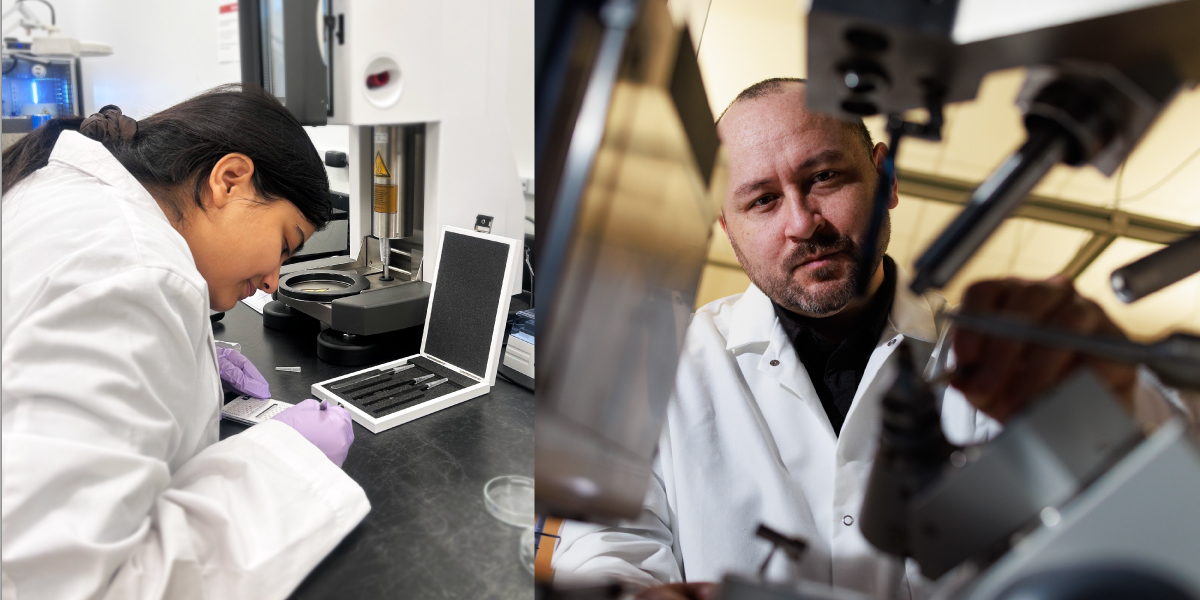
For harmful bacteria, survival inside the human body depends on finding enough iron. But humans tightly guard iron by locking it inside proteins, making it difficult for invading microbes to access. New research from Purdue University is revealing how one dangerous group of bacteria bypasses that defense system — and the findings could help guide future treatments and vaccines.
A team led by Purdue Biological Sciences Associate Professor Nicholas Noinaj uncovered how pathogenic Neisseria bacteria extract iron from human proteins during infection. The study provides the clearest picture yet of the molecular process the bacteria use to “pirate” iron from the body, a mechanism that is essential for their survival and ability to cause disease.
The research focused on Neisseria meningitidis and Neisseria gonorrhoeae, the bacteria responsible for meningitis and gonorrhea. These pathogens remain major public health concerns, particularly as antibiotic resistance continues to rise. The researchers note that gonorrhea alone causes an estimated 82 million new cases globally each year, while vaccine development for both pathogens remains challenging.
To survive inside the body, the bacteria rely on a specialized two-protein system called TbpA and TbpB. Together, these proteins capture iron from transferrin, a human blood protein responsible for transporting iron throughout the body. Previous studies identified the proteins involved, but many of the details behind how iron was actually removed and imported remained unknown.
Using cryo-electron microscopy, or cryo-EM, the Purdue-led team captured a series of structural snapshots showing the proteins in action. The images revealed that TbpA alone can physically force open part of transferrin, triggering the release of iron without requiring additional energy from the bacterial cell.
The researchers compared the process to mechanically prying open a locked container. By binding to transferrin in a specific way, TbpA separates regions of the protein just enough to destabilize the iron-binding site and release the metal.
The study also uncovered an unexpected role for TbpB. Earlier models suggested TbpB simply delivered iron-loaded transferrin to TbpA. Instead, the team found that TbpB changes its orientation after iron is released, forming a new interaction with transferrin and potentially helping regulate the next stages of the import process.
To confirm the structural findings, the researchers combined multiple experimental approaches, including electron paramagnetic resonance spectroscopy, molecular dynamics simulations and live bacterial studies. Together, the results supported a revised model for how the bacteria extract, transport and recycle iron-carrying proteins during infection.
The work also identified several regions of the Tbp system that appear critical for the bacteria’s ability to bind transferrin and acquire iron. Because the system is required for Neisseria survival and disease progression, the researchers say these newly identified interactions reveal exciting new strategies for targeting this system for future drugs or vaccines.
The interdisciplinary study involved collaborators from Purdue University, Georgia State University and the Georgia Institute of Technology. In addition to Noinaj, authors included Shubham Dubey, Julie Stoudenmire, Gabriel Bury, Lixinhao Yang, Zixing Fan, Peihang Li, Gauree Wadhwa, Yulia Pushkar, James C. Gumbart and Cynthia Nau Cornelissen.
About the Department of Biological Sciences at Purdue University
The Department of Biological Sciences is the largest life sciences department at Purdue University. As part of Purdue One Health, we are dedicated to pioneering scientific discoveries and transformative education at the cutting edge of innovation. From molecules to cells, from tissues to organisms, from populations to ecosystems- we bring together multiple perspectives, integrating across biological scales to advance our understanding of life and tackle the world’s most pressing challenges. Learn more at bio.purdue.edu.
Written by: Alisha Willett, Communications Specialist, amwillet@purdue.edu
Contributors: Nick Noinaj, nnoinaj@purdue.edu
Shubham Dubey