How a Cellular Switch Helps the Heart Keep Its Rhythm
03-09-2026
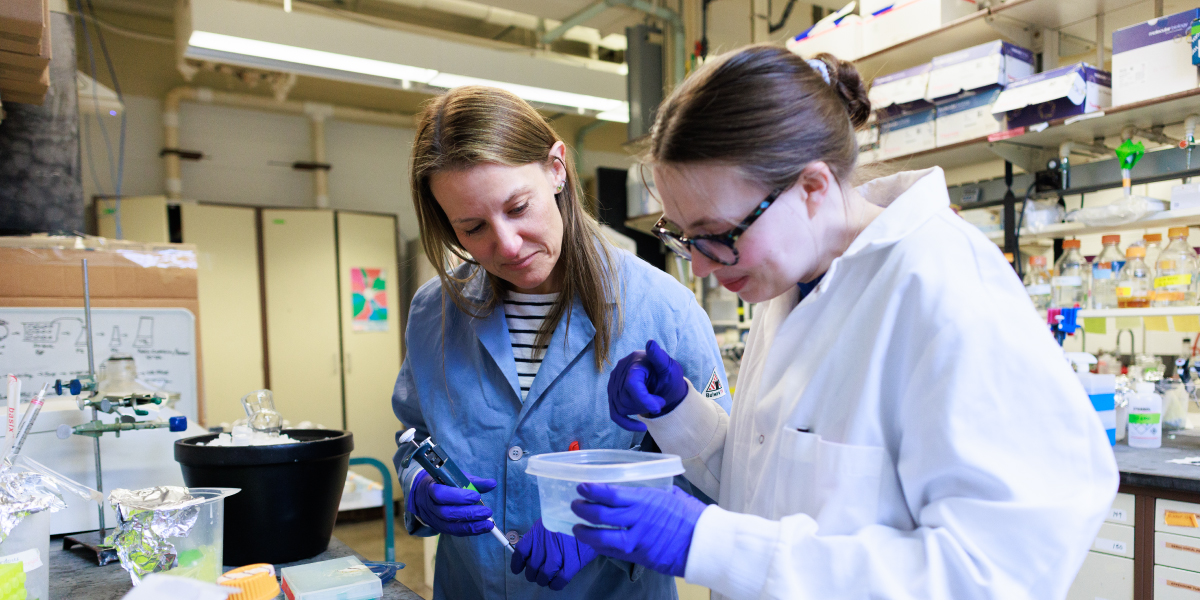
New research provides a clearer view of a protein that helps control cellular signals linked to heart rhythm and disease.
When the heart beats, it relies on precise signals inside its cells. Even small changes in those signals can affect how strongly or steadily it pumps. New research from Angeline Lyon and her team at Purdue University offers a clearer picture of a protein that helps control those signals - and what happens when it goes wrong.
Lyon, a professor of both chemistry and biological sciences and member of the Purdue Institute for Cancer Research, studies a group of enzymes called phospholipase C proteins. These enzymes act like switches inside cells. When activated by signals from outside the cell, such as hormones, they trigger a chain reaction that increases calcium levels and turns on other signaling pathways. In the heart, those changes help regulate how effectively it beats.
The team’s latest study, published in Communications Biology, focuses on a specific enzyme known as phospholipase C epsilon, or PLCε. This enzyme is essential for normal cardiovascular function. On its own, PLCε is relatively quiet. But when regulatory proteins bind to it in response to hormone signals, it moves to the cell membrane, where it becomes active.
“There’s a lot we still don’t know about what PLCε looks like and how it works,” Lyon said. “If we want to design ways to control its activity, we first need to understand its structure.”
That has not been easy. PLCε is a large, flexible protein made up of more than 2,000 building blocks called amino acids. Its size and shape have made it difficult to capture in detail. To overcome that challenge, the researchers engineered a smaller portion of the protein, removing roughly the first 800 amino acids to create a more manageable fragment called PLCε PH-C.
By working with collaborators to develop a stabilizing antibody-like molecule, the team was able to determine the structure of this fragment. The result provides the most complete picture of PLCε to date and reveals regions that scientists had previously only predicted.
One key feature the researchers identified is a section known as a PH domain. PH domains are small modules often involved in helping proteins attach to cell membranes or interact with other proteins. Because PLCε must reach the membrane to function, the team suspected this region might play an important role.
To test that idea, they altered specific spots on the surface of the PH domain and measured how those changes affected the protein’s activity in cells. Mutations in certain positively charged areas reduced PLCε’s activity, either alone or when paired with its regulatory partners. That finding supports the idea that these regions help the protein bind to the membrane, where it carries out its work.
The team also used computational modeling to explore how nearby regions of the protein might work together with the PH domain. Their models suggested that another domain, located just before the PH region, may help stabilize interactions with the membrane. When researchers introduced mutations in that region, they again saw reduced activity.
Together, the findings support a model in which PLCε remains inactive in the cell’s interior until a hormone signal activates a receptor at the cell surface. That activation prompts PLCε to move to the membrane, where newly characterized regions help it attach and become fully active. Without that membrane interaction, the heart may not respond properly to external signals.
Understanding this process has implications beyond basic biology. Abnormal PLCε activity has been linked to heart disease, including irregular heart rhythms. More recently, it has also been associated with certain cancers.
By mapping how different parts of PLCε work together, Lyon’s team is laying the groundwork for designing small molecules that could fine-tune the enzyme’s activity. Those molecules could one day serve as starting points for new treatments.
“Our goal is to understand how all the pieces fit together,” Lyon said. “Once we know how the protein is regulated, we can start thinking about how to control it when something goes wrong.”
The study adds an important piece to the puzzle of how cells translate external signals into action - and how those signals keep the heart, and potentially other tissues, functioning as they should.
About the Department of Biological Sciences at Purdue University
The Department of Biological Sciences is the largest life sciences department at Purdue University. As part of Purdue One Health, we are dedicated to pioneering scientific discoveries and transformative education at the cutting edge of innovation. From molecules to cells, from tissues to organisms, from populations to ecosystems- we bring together multiple perspectives, integrating across biological scales to advance our understanding of life and tackle the world’s most pressing challenges. Learn more at bio.purdue.edu.
About Purdue Chemistry
The James Tarpo Jr. and Margaret Tarpo Department of Chemistry is internationally acclaimed for its excellence in chemical education and innovation, boasting two Nobel laureates in organic chemistry, the #1 ranked analytical chemistry program, and a highly successful drug discovery initiative that has generated hundreds of millions of dollars in royalties. Learn more about chem.purdue.edu.
Written by: Alisha Willett, Communications Specialist, amwillet@purdue.edu
Contributors: Angeline Lyon, lyon5@purdue.edu