From Purdue to Global Health: Katey Einterz Owen to Receive Distinguished Science Alumni Award
03-25-2026
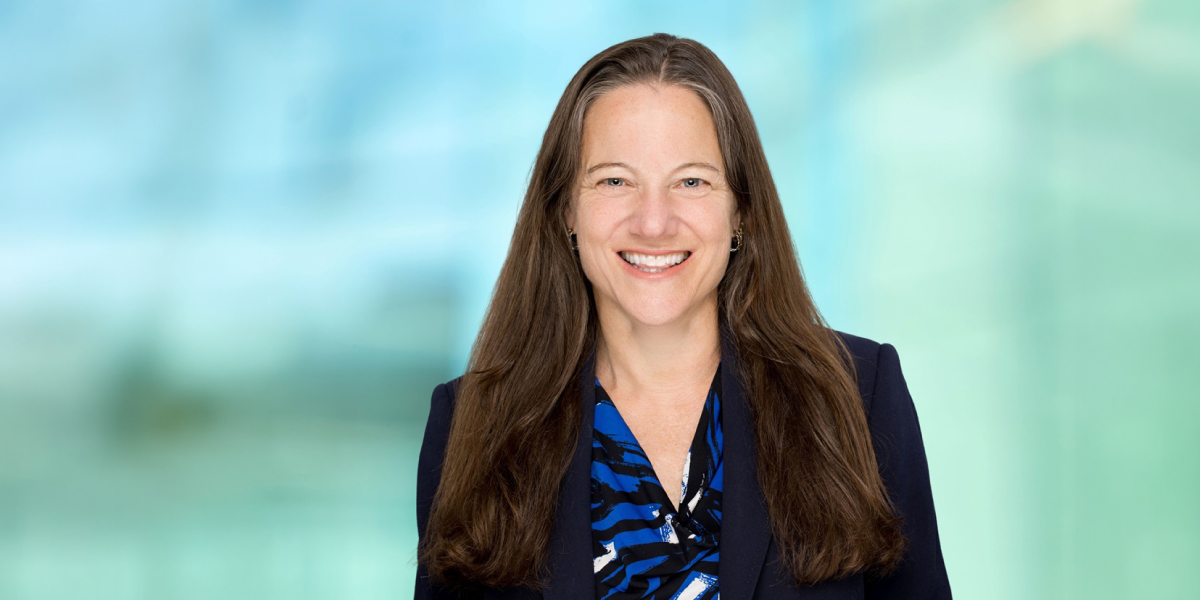
From vaccine development to global health leadership, Katey Einterz Owen’s career has been defined by science in service of others.
The Purdue University alumna has helped advance vaccines that protect children around the world and now leads major global health initiatives at the Bill & Melinda Gates Foundation. This spring, she will return to campus to receive the Distinguished Science Alumni Award, recognizing alumni whose careers have made a lasting impact through science.
For Owen, the recognition is also a chance to reflect on the place where her scientific journey took shape.
When she first arrived at Purdue as an undergraduate in 1987, she knew she wanted to work in genetic engineering—an emerging field at the time- but was still discovering exactly what that path might look like. Purdue’s research opportunities and collaborative scientific environment quickly helped turn that curiosity into a career.
In addition to attending the award ceremony, Owen will speak at a public event at 12:15 p.m. on April 17, in DLR 131 during her visit. The talk is free and open to the public, though registration is required to reserve a seat.
Finding her path at Purdue
Owen arrived at Purdue with broad interests and an open mind. Initially, she pursued a double major in genetics and physics, unsure whether she wanted to conduct research or become a physics teacher.
Her direction became clearer after gaining hands-on experience through Purdue’s cooperative education program. After her freshman year, she began alternating semesters between classes and a research position at the USDA in Peoria, Illinois- an opportunity arranged through Purdue’s counseling office. The experience confirmed that research was where she wanted to focus.
She dropped the physics major, committed fully to genetics and graduated in just three years. Along the way, she also worked in a campus laboratory studying plant genetics, gaining valuable research experience as an undergraduate.
Those early opportunities, she said, made a lasting difference.
“I got the grades and did the work, but at the end of the day it was really the opportunities at Purdue that enabled those things.”
After working briefly in industry following graduation, Owen returned to Purdue to pursue a PhD- another decision she now considers pivotal.
A formative graduate experience
Owen joined Purdue’s structural biology community, an area where the university had established international recognition. There, she worked with virologist Richard Kuhn, becoming one of the first graduate students in his lab.
Her research focused on small RNA viruses and examined them from multiple perspectives- genetics, biochemistry and structure- to understand how viral components function together. The work coincided with major advances in structural biology techniques such as electron microscopy and crystallography.
Being surrounded by leading scientists in the field left a lasting impression.
“As a girl from Indiana, getting to be exposed to world-renowned, cutting-edge science was incredibly exciting,” she said.
Owen ultimately became Kuhn’s first graduate student to complete a PhD in the lab. She later received Purdue’s H.E. Umbarger Award for Outstanding Graduate Student in Research.
Looking back, she describes the experience as the most formative period of her professional life.
“The decision to get my PhD- and to get it at Purdue- is the single most important decision I’ve made in my career,” Owen said.
From research to global health
Following her PhD, Owen pursued postdoctoral research in the United Kingdom at the National Institute for Medical Research, studying how influenza viruses infect cells.
She later joined Merck & Co., where she worked in vaccine research and development. During her time there, she contributed to several important vaccine programs, including work on a rotavirus vaccine that dramatically reduced severe illness among children.
At the time, rotavirus caused hundreds of thousands of deaths globally each year and tens of thousands of hospitalizations in the United States. Vaccination programs have since reduced those numbers dramatically.
Owen’s career at Merck eventually expanded beyond research. She moved into vaccine manufacturing to help troubleshoot production challenges and later spent time in commercial leadership roles, gaining experience across the business and scientific sides of the pharmaceutical industry.
The work was meaningful, but a pivotal moment prompted her to consider a different path. While evaluating investments in vaccine development, she faced a difficult decision: whether to focus resources on expanding markets in wealthier countries or developing vaccines better suited for children in lower-income regions.
Around that same time, an opportunity arose at the Gates Foundation.
Owen accepted the role and shifted her focus from the for-profit pharmaceutical sector to global health.
Leading global vaccine efforts
Today, Owen leads programs focused on neglected tropical diseases and vaccine development at the Gates Foundation. Her work brings together pharmaceutical companies, global health organizations and researchers from around the world.
These efforts focus on diseases that disproportionately affect lower-income regions, including initiatives to eliminate infectious diseases and advance vaccines for illnesses such as HIV, tuberculosis, malaria and respiratory infections.
Over the course of her career, Owen has contributed to the development of vaccines that have reached hundreds of millions of children worldwide, helping reduce diseases that once caused hundreds of thousands of deaths each year. In her current role, she has also helped drive progress against neglected tropical diseases, including advancing new treatments such as acoziborole—a single-dose cure for African sleeping sickness—and supporting global efforts that have reduced Guinea worm disease from millions of cases annually to just a handful worldwide.
The foundation’s guiding principle- that all lives have equal value- aligns closely with Owen’s long-standing motivation to pursue science in service of others.
Mentorship and the next generation
Alongside her scientific leadership, Owen is deeply committed to mentoring the next generation of scientists. She works with early-career researchers and leaders, particularly women navigating careers in science.
Her connection to Purdue has continued through the years as well. One example is especially personal: her oldest son completed a summer research experience in Kuhn’s lab while still in high school- an opportunity that helped inspire him to pursue his own career in virology.
A meaningful recognition
Returning to Purdue to receive the Distinguished Science Alumni Award carries special significance for Owen.
The university, she says, played a defining role in shaping her career and exposing her to the collaborative, interdisciplinary science that continues to influence her work today.
“I was always aware that I was at the cutting edge,” she said of her time at Purdue. “Being in that environment was incredibly formative.”
As she returns to campus, Owen hopes to share those experiences with students and the broader community.
Her public talk on April 17 at 12:15 p.m. in DLR 131 will offer a chance to hear firsthand about her journey- from a Purdue undergraduate exploring career options to a global health leader working to expand access to lifesaving vaccines.
The event is free and open to the public, though registration is required to reserve a seat.
About the Department of Biological Sciences at Purdue University
The Department of Biological Sciences is the largest life sciences department at Purdue University. As part of Purdue One Health, we are dedicated to pioneering scientific discoveries and transformative education at the cutting edge of innovation. From molecules to cells, from tissues to organisms, from populations to ecosystems- we bring together multiple perspectives, integrating across biological scales to advance our understanding of life and tackle the world’s most pressing challenges. Learn more at bio.purdue.edu.
Written by: Alisha Willett, Communications Specialist, amwillet@purdue.edu
Contributors: Katey Owen