Anne Carpenter returns to Purdue as professor, bringing pioneering expertise in computational biology and imaging
08-17-2026
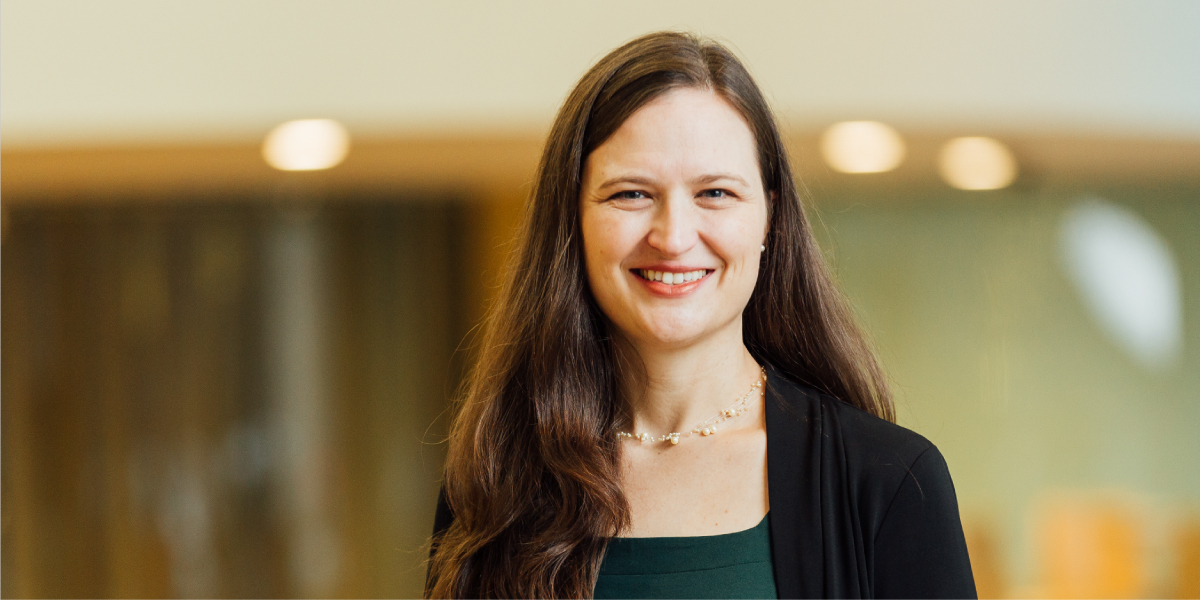
For Anne Carpenter, returning to Purdue is more than a new chapter in an accomplished scientific career. It is a return to the university that helped launch her journey as a scientist.
Carpenter, a Purdue alumna and internationally recognized researcher in computational biology and biological imaging, will join Purdue University this month as the Irwin Tessman Professor, with appointments in the Department of Biological Sciences and the Department of Computer Science. She comes to Purdue after 20 years at the Broad Institute of MIT and Harvard, where she has served as an institute scientist and senior director of the Imaging Platform.
“I’m thrilled to announce I’m joining Purdue University as a professor this August,” Carpenter wrote in announcing her return. “Purdue holds a special place in my heart: its undergraduate program prepared me remarkably well for my research career.”
Carpenter is joining Purdue through the university’s talent-based Moveable Dream Hires program, which is piloted by the deans and provost to attract high-performing, top-caliber faculty even when topic-based openings in a given year do not align with the available talent. The program complements traditional faculty searches and allows Purdue to recruit exceptional faculty who may not be actively seeking new positions.
“We are delighted to welcome Anne back to Purdue,” said Lucy Flesch, Frederick L. Hovde Dean of the College of Science. “Her accomplishments at the intersection of biology, computation and imaging exemplify the kind of interdisciplinary scholarship that is shaping the future of science. Bringing a scientist of Anne’s caliber back to her alma mater strengthens our research community and creates exciting opportunities for collaboration across the College of Science and beyond.”
“Anne’s return is particularly meaningful because she began her scientific journey at Purdue,” said Peristera Paschou, professor and head of Biological Sciences. “Her work has had a tremendous impact on how researchers use imaging and computation to understand biology, and her expertise is an exceptional fit with the interdisciplinary strengths we are building in Biological Sciences. We are excited to welcome her back and look forward to the opportunities her research and mentorship will create for our students and faculty.”
Her return comes nearly three decades after she earned her bachelor’s degree in biology from Purdue. She went on to earn her doctorate in cell and developmental biology from the University of Illinois Urbana-Champaign before beginning a career bridging biology, computer science and imaging.
From Purdue biology student to scientific leader
Carpenter’s career has been defined by finding new ways to use computers and biological images to answer questions that are difficult to address with traditional approaches.
At the Broad Institute, she built a research program that brings together biologists and computer scientists to develop open-source tools for analyzing biological images. Her team created CellProfiler, software that allows researchers to automatically extract information from large numbers of microscopy images. The software is now used by hundreds of thousands of biologists around the world.
Carpenter and her collaborators also developed Cell Painting, an approach that uses microscopy imaging to capture many features of cells at once. Researchers can use those images to study how cells respond to drugs or changes in their genes, helping them identify patterns that could point to potential treatments or reveal how genes work.
The approach has grown into a large collaborative effort involving researchers from academia, nonprofit organizations and the pharmaceutical industry. Carpenter has led the JUMP-Cell Painting Consortium, which created one of the largest publicly available collections of cellular images and data for studying how cells respond to different chemical and genetic changes.
Her work has helped establish image-based profiling as a powerful approach for drug discovery and functional genomics. Her research has also contributed to the creation of biotechnology companies, including Recursion and SyzOnc.
Beyond her research, Carpenter has been recognized for her contributions to science and innovation. She is an NIH Maximizing Investigators’ Research Award recipient and an NSF CAREER awardee, and she was named an honorary fellow of the Royal Microscopical Society. In 2024, Cell Press selected her as one of its “50 Scientists That Inspire,” recognizing her work developing tools to analyze cell images and accelerate drug discovery.
Honored by her alma mater
Carpenter’s accomplishments brought her back to Purdue last year as part of the university’s celebration of 150 years of biological sciences.
In October 2025, Purdue Biological Sciences presented Carpenter with its 150th Anniversary Distinguished Alumna Award. The award was presented by fellow Purdue alumna and renowned scientist Rita Colwell during a special celebration recognizing the department’s history and its alumni.
The recognition marked a milestone in Carpenter’s relationship with Purdue — one that will now continue in a new role.
As a faculty member, Carpenter will bring her experience building interdisciplinary research programs and developing accessible computational tools to Purdue’s Biological Sciences and Computer Science communities. Her work combines biology, data science, artificial intelligence and drug discovery, creating opportunities for collaboration across disciplines.
Purdue’s Biological Sciences department recently launched its Genomics, Multiomics & AI research area, which brings together faculty using computational and experimental approaches to understand complex biological data. Carpenter’s expertise aligns closely with this interdisciplinary effort and adds to Purdue’s growing strength at the intersection of biology and computation.
Her return also reflects the lasting impact of a Purdue education — and the opportunity to bring accomplished alumni back to campus to help shape the next generation of scientific discovery.
For Carpenter, that connection to Purdue is personal.
“I’m excited to give back to public education,” she said.
Now, nearly 30 years after she first walked onto Purdue’s campus as a biology student, Carpenter is returning to help prepare the next generation of scientists for their own next giant leaps.
About the Department of Biological Sciences at Purdue University
The Department of Biological Sciences is the largest life sciences department at Purdue University. As part of Purdue One Health, we are dedicated to pioneering scientific discoveries and transformative education at the cutting edge of innovation. From molecules to cells, from tissues to organisms, from populations to ecosystems- we bring together multiple perspectives, integrating across biological scales to advance our understanding of life and tackle the world’s most pressing challenges. Learn more at bio.purdue.edu.
About the Department of Computer Science at Purdue University
Founded in 1962, the Department of Computer Science was created to be an innovative base of knowledge in the emerging field of computing as the first degree-awarding program in the United States. The department continues to advance the computer science industry through research. U.S. News & World Report ranks the department No. 8 in computer engineering and No. 16 overall in undergraduate and graduate computer science. Additionally, the program is ranked No. 6 in cybersecurity, No. 8 in software engineering, No. 13 in systems, No. 15 in programming languages and data analytics, and No. 18 in theory. Graduates of the program are able to solve complex and challenging problems in many fields. Our consistent success in an ever-changing landscape is reflected in the record undergraduate enrollment, increased faculty hiring, innovative research projects, and the creation of new academic programs. The increasing centrality of computer science in society, academic disciplines and new research activities — centered around foundations and applications of artificial intelligence and machine learning, such as natural language processing, human computer interaction, vision, and robotics, as well as systems and security — are the future focus of the department. Learn more at cs.purdue.edu.
Written by: Alisha Willett, Communications Specialist, amwillet@purdue.edu
Contributors: Anne Carpenter, Lucy Flesch, Peristera Paschou