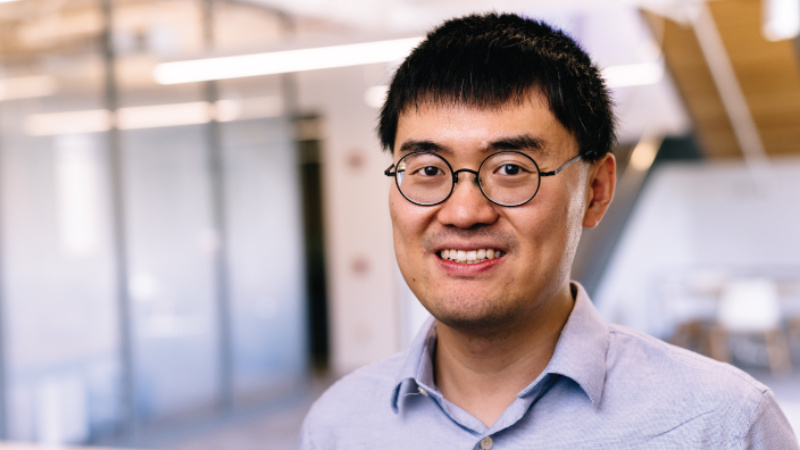
Tong Wang
Research Areas
Our research lies at the dynamic intersection of computational biology, microbiology, and ecology. We develop both mechanistic models and machine-learning methods to address complex problems in microbial communities. Our work focuses on uncovering the intricate interactions between diet, microbes, metabolites, and the host. By modeling microbial ecosystems and integrating diverse multi-omics datasets, we aim to reveal the mechanisms that shape these communities and their critical roles in human health. Additionally, we work on web-lab experiments to validate the results from computational methods and generate multi-omics data based on synthetic microbial consortia.
Education
Postdoctoral Research Fellow, Brigham and Women's Hospital, Harvard Medical School
Ph.D., Physics, University of Illinois Urbana-Champaign
B.S., Applied Physics, University of Science and Technology of China
Selected Publications (*: equal contribution, #: corresponding author)
- Wang T , Gyori BM, Weiss ST, Menichetti G, Liu YY. Revealing Interactions between Microbes, Metabolites, and Dietary Compounds using Genome-scale Analysis. In Press at Microbiome . BioRxiv DOI: 10.64898/2025.12.03.692129
- Wang T #, George AB, Maslov S#. Higher-order interactions in auxotroph communities enhance their resilience to resource fluctuations. In Press at Cell Systems . BioRxiv DOI: 10.1101/2024.05.22.595348
- Wang T , Holscher HD, Maslov S, Hu FB, Weiss ST, Liu YY. Predicting metabolite response to dietary intervention using deep learning. Nature Communications . 2025 Jan 18;16(1):815. DOI: 10.1038/s41467-025-56165-6
- Wang T , Fu Y, Shuai M, Zheng JS, Zhu L, Chan AT, Sun Q, Hu FB, Weiss ST, Liu YY. Microbiome-based correction for random errors in nutrient profiles derived from self-reported dietary assessments. Nature Communications . 2024 Oct 22;15(1):9112. DOI: 10.1038/s41467-024-53567-w
- Wang T *, Li L*, Figeys D, Liu YY. Pairing metagenomics and metaproteomics to characterize ecological niches and metabolic essentiality of gut microbiomes. ISME Communications . 2024 Jan 1;4(1):ycae063. DOI: 10.1093/ismeco/ycae063
- Li L*, Wang T *, Ning Z, Zhang X, Butcher J, Serrana JM, Simopoulos CM, Mayne J, Stintzi A, Mack DR, Liu YY, Figeys D. Revealing proteome-level functional redundancy in the human gut microbiome using ultra-deep metaproteomics. Nature Communications . 2023 Jun 10;14(1):3428. DOI: 10.1038/s41467-023-39149-2
- Wang T , Wang XW, Lee-Sarwar KA, Litonjua AA, Weiss ST, Sun Y, Maslov S, Liu YY. Predicting metabolomic profiles from microbial composition through neural ordinary differential equations. Nature Machine Intelligence . 2023 Mar;5(3):284-93. DOI: 10.1038/s42256-023-00627-3
- Goyal A*, Wang T *, Dubinkina V, Maslov S. Ecology-guided prediction of cross-feeding interactions in the human gut microbiome. Nature Communications . 2021 Feb 26;12(1):1335. DOI: 10.1038/s41467-021-21586-6
- Ping D*, Wang T *, Fraebel DT, Maslov S, Sneppen K, Kuehn S. Hitchhiking, collapse, and contingency in phage infections of migrating bacterial populations. The ISME Journal . 2020 Aug;14(8):2007-18. DOI: 10.1038/s41396-020-0664-9
- Wang T *, Goyal A*, Dubinkina V, Maslov S. Evidence for a multi-level trophic organization of the human gut microbiome. PLoS Computational Biology . 2019 Dec 19;15(12):e1007524. DOI: 10.1371/journal.pcbi.1007524